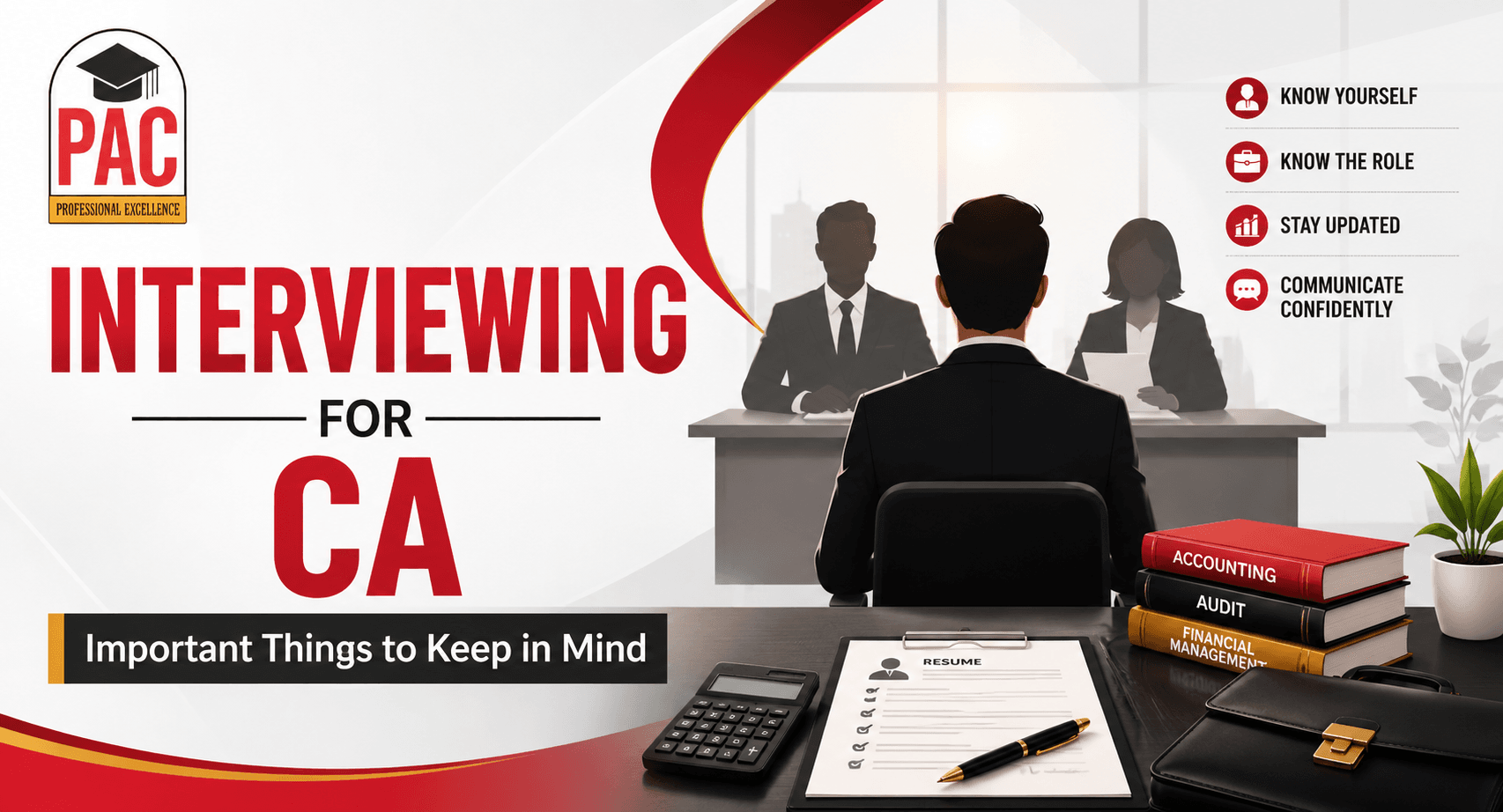
Landing a CA articleship or post-qualification job is a major milestone, and the interview is often the final gate standing between you and your goal. Many students who clear demanding exams still struggle in the interview room simply because they did not prepare the right way. Whether you are targeting a Big 4 firm or a mid-tier practice, knowing what interviewers actually look for gives you a real edge.
To ace a CA interview, prepare thoroughly on core accounting standards, auditing basics, and tax regulations. Beyond technical knowledge, your communication skills, professionalism, and body language matter just as much. Dress formally, arrive early, research the firm before walking in, and practice your answers to both technical and behavioral questions. Structured, consistent preparation is what separates average candidates from genuinely standout ones.
To give you a better idea about how to prepare for CA, we have written this detailed guide on how to prepare for your next CA interview by following some tips, tricks, and check-in balances.
Why Does the CA Interview Matter So Much?
If you are pursuing CA in Lahore, you already know how demanding the qualification is. ICAP’s advanced-level exams regularly see pass rates below 15%, according to ICAP’s official result statistics. But clearing those exams does not automatically mean you will shine in an interview room.
The articleship interview in particular is where firms decide whether you are a good fit beyond your academic scores. They want to assess your communication skills, logical thinking, and genuine interest in the profession. It is not just about what you know; it is about how you present what you know.
And with so many exciting career paths opening up after CA, from audit and taxation to CFO roles and entrepreneurship, doing well in your interview sets the foundation for everything that follows.
How Should You Prepare Technically for a CA Interview?
Technical preparation is non-negotiable for articleship interviews at audit or accounting firms. Here is what to focus on:
- Accounting Standards: Revise IFRS principles, especially IFRS 9, 15, and 16, and understand how they apply in real financial statements.
- Auditing Concepts: Know the basics of audit risk, internal controls, and materiality. These come up constantly in firm interviews.
- Taxation: Be comfortable with Pakistan’s income tax and sales tax frameworks covered in the ICAP syllabus.
- ICAP Updates: Interviewers at registered firms sometimes test your awareness of the latest regulatory changes and ICAP guidelines.
- Current Affairs in Finance: Stay on top of budget announcements, economic developments, and business news that relate to accounting and finance.
Also, review your own academic record before every interview. Your cleared papers and scores are often used as conversation starters for technical questions, so know your own CV inside out.
What Should Your Appearance and Body Language Convey?
First impressions form within seconds, and in a CA interview they carry genuine weight. Keep these points in mind:
- Dress formally: Men should wear a well-fitted suit or formal trousers with a neat shirt. Women should opt for professional formal attire.
- Arrive early: Getting there 10 to 15 minutes before your scheduled time shows punctuality and respect for the interviewer.
- Firm handshake: Keep it confident and dry. A weak or clammy grip leaves a poor impression right away.
- Eye contact: Look the interviewer in the eye steadily. Constantly looking around the room signals nervousness.
- Posture: Sit upright and stay engaged throughout the conversation.
- Avoid fidgeting: Clicking pens, tapping feet, or touching your hair during the interview is distracting and reflects anxiety.
What Kind of Questions Should You Expect in a CA Interview?
CA interviews typically cover three categories of questions. Knowing each type helps you prepare more efficiently:
| Question Type | What It Tests | Common Examples |
|---|---|---|
| Technical | Subject knowledge and practical application | IFRS standards, audit risk, tax principles |
| Behavioral | Soft skills, teamwork, and ethical judgment | “Describe how you handled competing deadlines” |
| Motivational | Career intent and interest in the firm | “Why CA?” “Where do you see yourself in five years?” |
For motivational questions, keep your answer genuine and specific. Vague lines like “I like numbers” do not land well. Research the firm before you go in and show you know who they are, what they do, and why you want to work with them specifically.
If you want more guidance on how to secure an articleship at top CA firms, preparing across all three question types is essential before you apply.
How Do You Handle Behavioral and Scenario-Based Questions?
Behavioral and scenario-based questions often catch candidates off guard. Examples include: “How would you handle a situation where a senior made an accounting error?” or “Describe how you managed competing deadlines during exams.”
Use the STAR method to structure your answers clearly:
- Situation: Set the context briefly.
- Task: Explain what your specific responsibility was.
- Action: Describe exactly what you did.
- Result: Share what happened as an outcome.
Keep answers focused and under two minutes. Interviewers want to see how you think and whether your instincts reflect professional accounting values. If you need a moment to collect your thoughts before answering, take it. A composed pause followed by a clear, structured response always beats a rushed and scattered one.
How Does PAC Help CA Students Ace Their Interviews?
The Professional Academy of Commerce (PAC) is Pakistan’s leading accounting institute, with over 30 years of experience and a track record that includes 71 Gold Medals across CA and ACCA qualifications. PAC goes beyond just exam preparation; it actively trains students for what comes after.
Practical Interview Mockups
PAC runs dedicated Interview Training Sessions for CAF-qualified students preparing for articleship interviews. These are mock sessions conducted by qualified FCAs and ACAs who bring real-world interviewing experience to the table. Students learn how to present themselves confidently, communicate clearly, handle scenario-based questions, and build CVs that genuinely stand out.
Online Learning Facility
These sessions are also available online through the PAC School of Online Learning, making them accessible to students across Pakistan regardless of location.
Networking With Major Firms
PAC also maintains strong connections with top audit firms that help students land quality articleship placements. If you want to start building your professional image well before interview season, PAC’s blog on building a personal brand as a CA student is a great place to begin.
If you want to prepare yourself with a strong background and confident attitude to work as a CA, contact PAC today. With the right mentorship, practical experience, and career counseling, we can help you secure lucrative opportunities that you inspire for.
Frequently Asked Questions
1. What are the most common questions asked in a CA articleship interview?
Interviewers typically ask about accounting fundamentals, auditing basics, why you chose CA, how you handle pressure at work, and what you know about their firm. Both technical and motivational questions feature heavily in most firm interviews.
2. How early should I apply for a CA articleship in Pakistan?
Top firms often begin shortlisting candidates before exam results are officially announced. Apply as early as possible through ICAP’s registered firm list, firm websites, and professional platforms like LinkedIn.
3. Does dressing formally really make a difference in a CA interview?
Yes, it does. How you present yourself physically influences how interviewers perceive your professionalism before you even say a word. Formal, neat attire signals that you take the opportunity seriously.
4. Should I prepare for technical questions even if I have not finished all CA exams?
Yes. Firms expect you to speak confidently about the subjects you have already cleared and apply that knowledge to real-world accounting and audit scenarios during the interview.
5. How should I answer “Tell me about yourself” in a CA interview?
Mention your educational background, the CA modules you have cleared, any relevant experience or internships, and your career direction. Keep the answer professional, structured, and under two minutes.
6. Is it okay to ask questions at the end of a CA interview?
Absolutely, and you should. Asking thoughtful questions about the firm’s training programs, work culture, or team structure shows genuine interest in the role and leaves a strong final impression on the interviewer.